National Lab Report
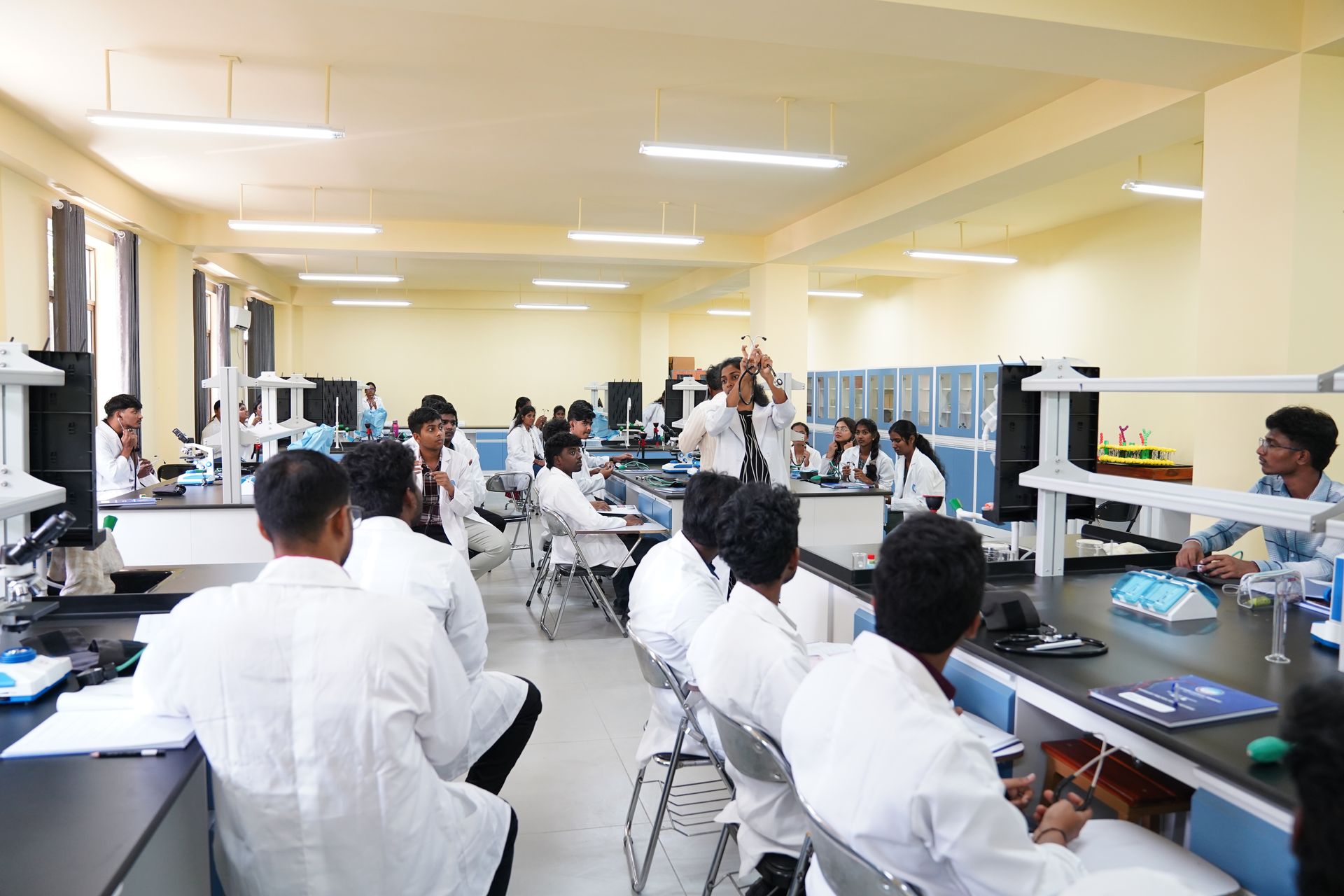
National Laboratory, INSPTL, Bidau, Díli, Timor-Leste — a one-week, faculty-signed laboratory posting for the International MBBS Programme.
Faculty of Medicine – International MBBS Programme
National Laboratory Visit (INSPTL) — Logbook
UCT MBBS students complete a structured posting at the National Laboratory (INSPTL) in Bidau, Díli. The visit logbook records daily laboratory activities, skills observed and faculty-signed competency records across five diagnostic departments.
- Posting: National Laboratory, INSPTL, Bidau, Díli, Timor-Leste
- Duration: 1 week · Timing: 3:00 PM – 4:00 PM
- Samples received from HNGV, CHCs and other health centres
5Lab Departments
21Learning Objectives
1 WeekINSPTL Posting
BidauDíli, Timor-Leste
Five Diagnostic Units at INSPTL
Tuberculosis
Molecular Biology
Biochemistry
Pathology / Hematology
What Students Are Trained to Do
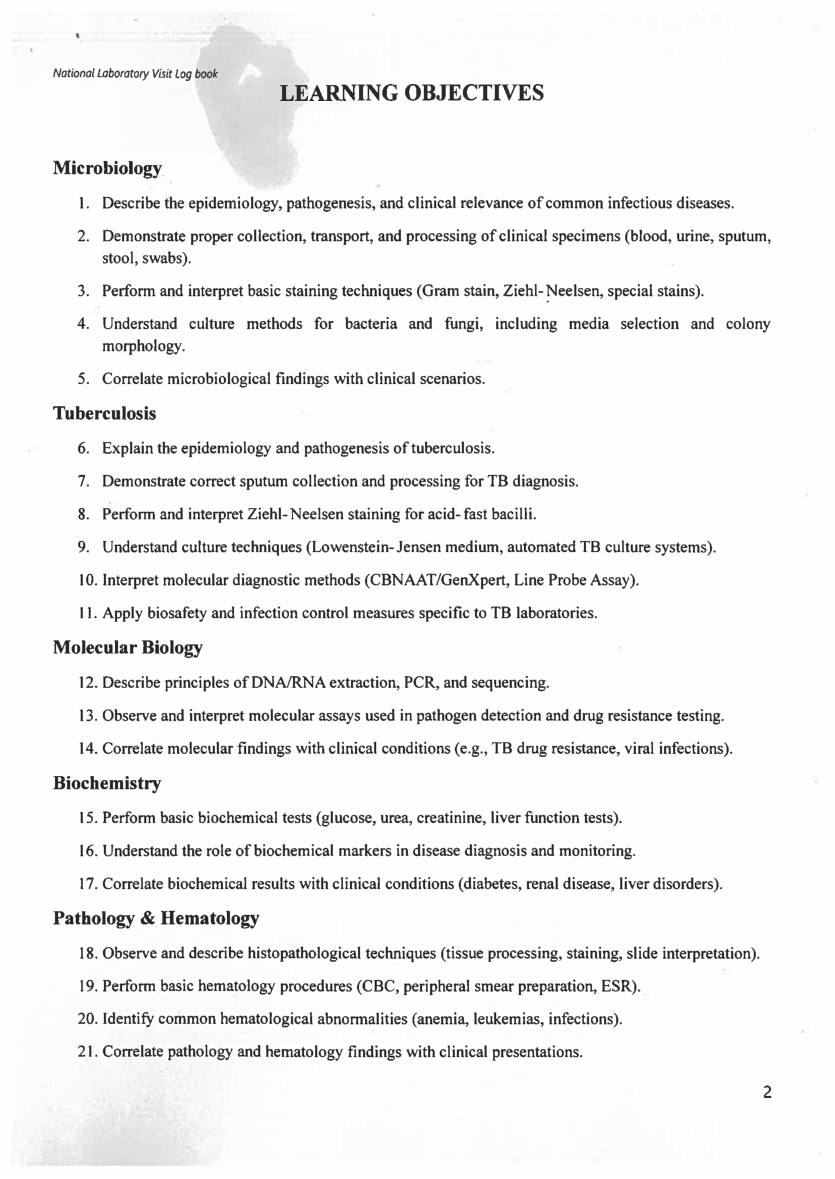
Twenty-one objectives from the official National Laboratory Visit logbook, grouped by department.
Microbiology
- Describe the epidemiology, pathogenesis and clinical relevance of common infectious diseases.
- Demonstrate proper collection, transport and processing of clinical specimens (blood, urine, sputum, stool, swabs).
- Perform and interpret basic staining techniques (Gram stain, Ziehl-Neelsen, special stains).
- Understand culture methods for bacteria and fungi, including media selection and colony morphology.
- Correlate microbiological findings with clinical scenarios.
Tuberculosis
- Explain the epidemiology and pathogenesis of tuberculosis.
- Demonstrate correct sputum collection and processing for TB diagnosis.
- Perform and interpret Ziehl-Neelsen staining for acid-fast bacilli.
- Understand culture techniques (Lowenstein-Jensen medium, automated TB culture systems).
- Interpret molecular diagnostic methods (CBNAAT / GeneXpert, Line Probe Assay).
- Apply biosafety and infection control measures specific to TB laboratories.
Molecular Biology
- Describe principles of DNA/RNA extraction, PCR and sequencing.
- Observe and interpret molecular assays used in pathogen detection and drug resistance testing.
- Correlate molecular findings with clinical conditions (for example TB drug resistance and viral infections).
Biochemistry
- Perform basic biochemical tests (glucose, urea, creatinine, liver function tests).
- Understand the role of biochemical markers in disease diagnosis and monitoring.
- Correlate biochemical results with clinical conditions (diabetes, renal disease, liver disorders).
Pathology & Hematology
- Observe and describe histopathological techniques (tissue processing, staining, slide interpretation).
- Perform basic hematology procedures (CBC, peripheral smear preparation, ESR).
- Identify common hematological abnormalities (anemia, leukemias, infections).
- Correlate pathology and hematology findings with clinical presentations.
Observed Laboratory Competencies
Microbiology
- Gram staining
- Bacterial culture (Nutrient Agar, Blood Agar)
- Colony morphology
- Kirby-Bauer antibiotic sensitivity
- Fungal culture and identification
Tuberculosis
- Sputum collection
- Ziehl-Neelsen staining
- AFB microscopy
- LJ medium and MGIT culture
- CBNAAT / GeneXpert interpretation
- TB laboratory biosafety
Molecular Biology
- DNA/RNA extraction
- PCR setup and interpretation
- Gel electrophoresis
- Line Probe Assay and sequencing
Biochemistry
- Blood glucose estimation
- Liver function tests (SGOT, SGPT)
- Kidney function tests (urea, creatinine)
- Protein estimation (Biuret method)
Pathology & Hematology
- Peripheral smear preparation and staining
- Complete Blood Count (CBC)
- ESR determination
- Histopathology slides (H&E)
- Common hematological abnormalities (anemia, leukemia)
What a Week at INSPTL Covers
Taken from faculty-signed daily log entries and department visit reports.
Biochemistry
- Samples from hospitals such as HNGV and CHCs are registered and barcoded.
- Serum is separated from yellow SST vacutainers and run on the Vitros 650 analyser.
- Prescribed tests include glucose, urea, creatinine and other biochemical parameters, with results in 10–15 minutes.
Hematology
- CBC, ESR, CD4 counts and peripheral blood smear examination.
- Observation of high and low WBC and platelet counts, including HIV monitoring.
Microbiology & TB
- Gram staining, culture media (Nutrient Agar, Blood Agar) and Ziehl-Neelsen staining.
- TB diagnosis with GeneXpert, Line Probe Assay and culture methods.
Molecular Biology
- DNA/RNA extraction, master-mix preparation, real-time PCR and GeneXpert / sequencing overview.
- Influenza molecular testing covering Influenza A (H3, H1N1 PDM09, H5, H7) and Influenza B (Yamagata and Victoria).
Systems observed on posting include Vitros 650 automated biochemistry analyser, GeneXpert / CBNAAT, BD Phoenix, Line Probe Assay (LPA).
Download the Full Lab Visit Report
The complete student logbook PDF is available from this page and from the Downloads tab.